Recovering from a C-section while learning to breastfeed can feel like a lot – physically, emotionally, and mentally.
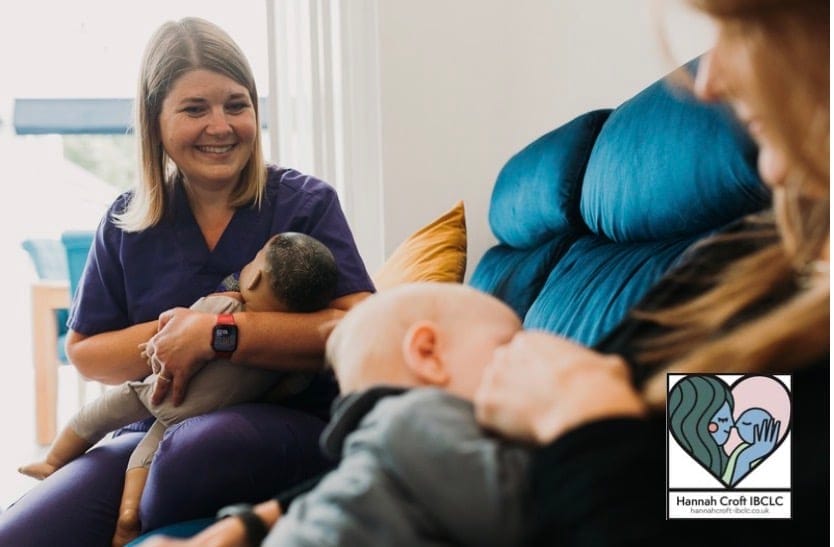
To support parents navigating this stage, IBCLC Hannah Croft shares her expert guidance on how to approach feeding after a caesarean birth, from preparing in advance to protecting your milk supply and prioritising recovery.
Preparing for the Early Days
As with planning any birth, it can be helpful to think ahead to what comes next after your c-section. Who will be supporting you? Where will you be recovering? How would you like those those first few days to look?
Having a plan in place can help you feel more prepared and supported as you begin feeding and recovery.
Understanding Your Milk Supply
Learn about how your body transitions from producing colostrum to milk – and this will help set you up for success.
While milk-making is a hormonally-led process initially, understanding what’s happening to your breasts and body, is incredibly helpful – not to mention empowering.
If Baby Doesn’t Latch Straight Away
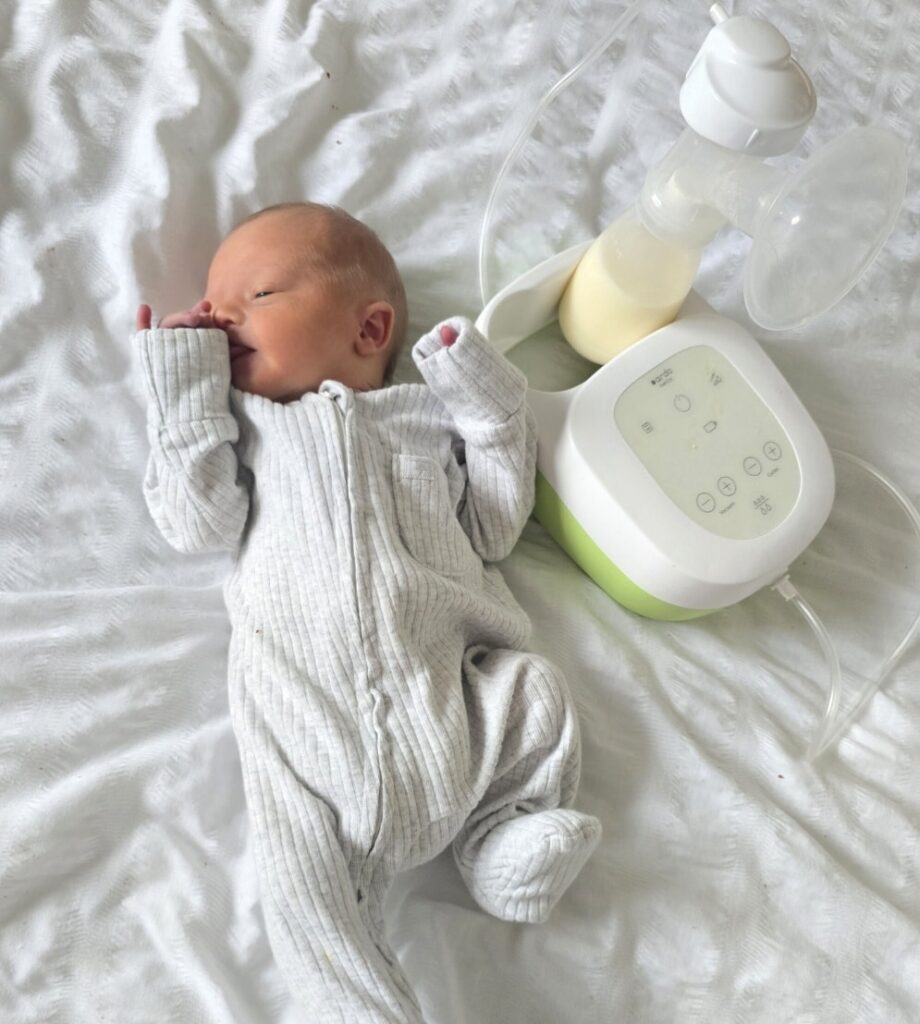
Not all babies will latch straight-away, and that’s okay! If your baby is struggling to latch, it’s important to protect your milk supply by hand expressing and then using a breast pump.
Any colostrum/milk you express can be given to your baby via syringe or spoon. Protecting your supply in this way gives you time to get baby feeding at the breast.
Sophie Nichols pumping after her c-section
Finding Comfortable Feeding Positions
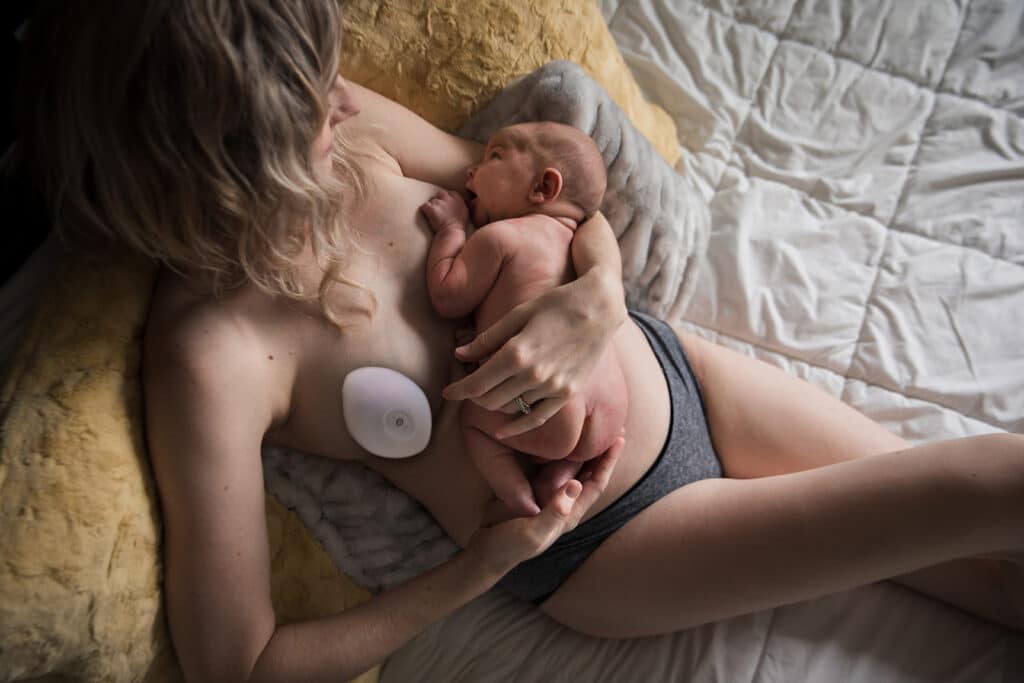
Explore C-section-friendly feeding positions, such as reclined or laid-back positions, and make use of adjustable hospital beds to support your posture.
These positions can also help encourage your baby’s natural feeding reflexes and use gravity to your advantage.
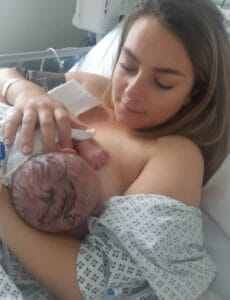
Grace Redmond breastfeeding after her c-section
Prioritising Recovery and Support
It takes time to recover from a c-section so draft in extra help! Whether that’s caring for older children, cleaning the bathroom, cooking a hot meal for you, or walking the dog.
Concentrate on keeping your baby close, practising feeding and healing. Recovering from a C-section takes time, so it’s important to bring in extra support where possible.
Know Where to Get Support
Look into the feeding support available to you; whether that’s local peer support groups, national feeding helplines or enlisting the support of an IBCLC for specialist feeding care.
Knowing where to turn can make a big difference, especially in the early days.
Managing Pain While Feeding
Most pain medication prescribed after a C-section is compatible with breastfeeding.
Keeping on top of your pain management can help you stay as comfortable as possible, which in turn supports feeding and recovery.
The Early Weeks Matter
The first few weeks of breastfeeding are an investment in what comes next.
Stay in bed or rest on the sofa, keep baby close, and understand about effective feeding. You’ll reap the rewards once breastfeeding is established.

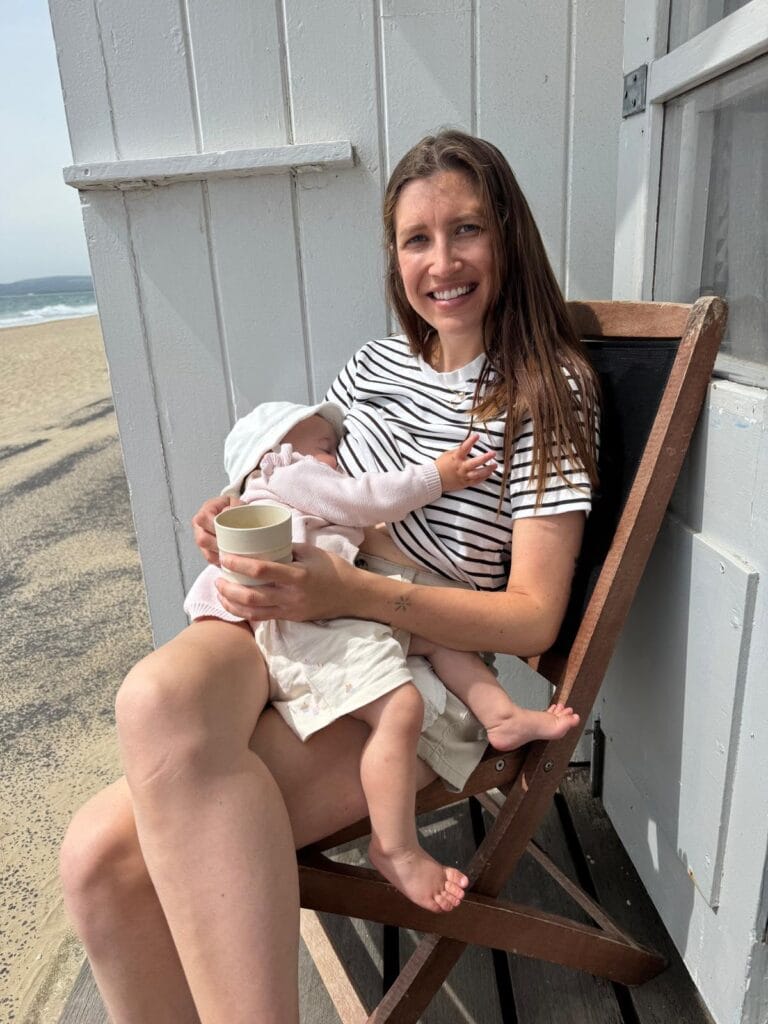
C-section mum Lydia and baby
Be Mindful of Information Overload
Try and avoid constant online searching and instead pick one trusted source for breastfeeding information/guidance. There’s so much information online, much of which isn’t evidence based or up-to-date.
The internet can be helpful but it can also send you spiralling.
You Don’t Have to Do This Alone
Don’t hesitate to seek support, even if it’s just for reassurance. You’ve had a big op, on top of keeping this tiny human alive.
You don’t need to do this alone!
Breastfeeding after a C-section may look different, but with the right support and understanding, it is absolutely possible.