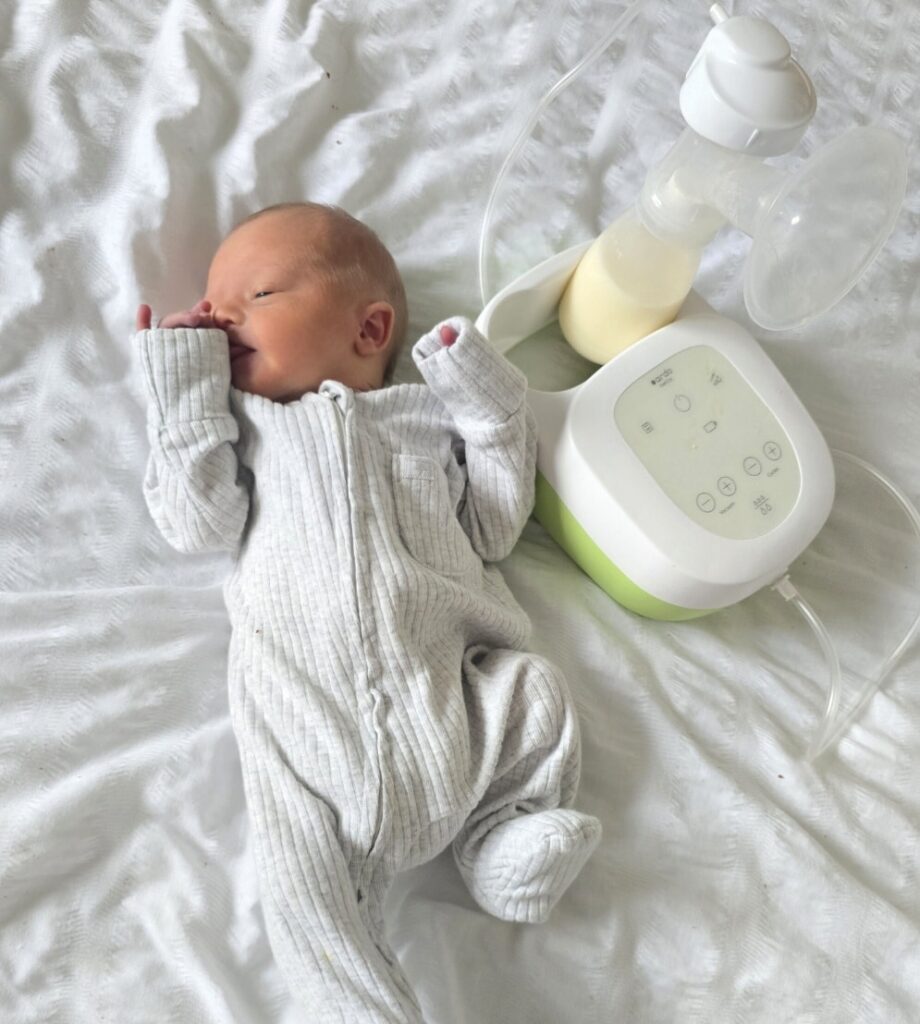
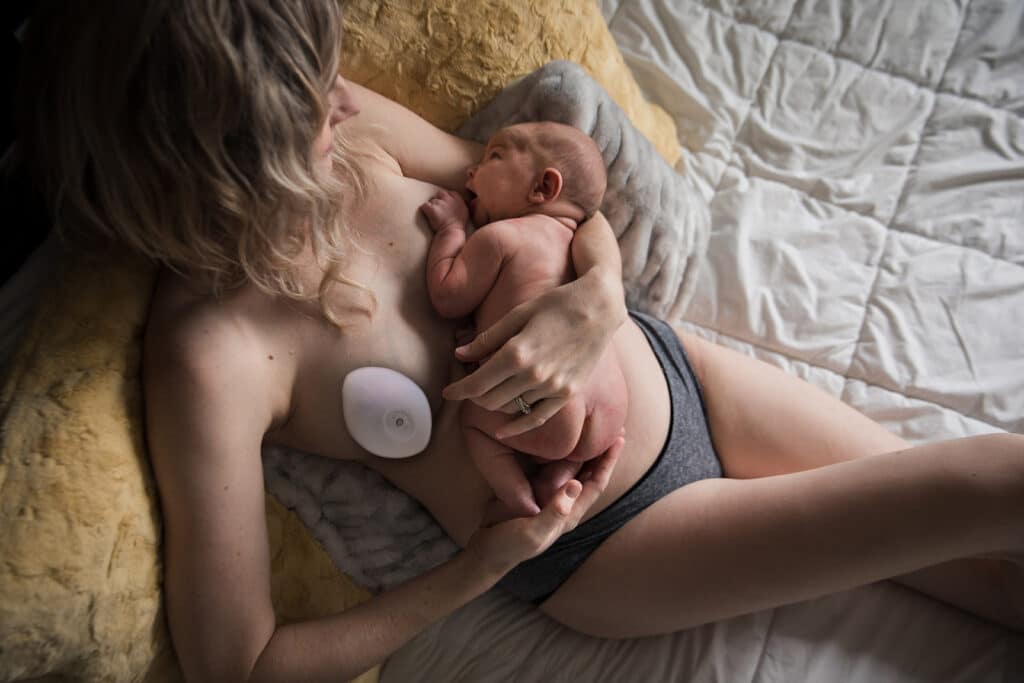
Does breastfeeding mean less sleep for you and your baby? It’s a question many new parents ask, particularly when they’re navigating frequent night feeds and exhaustion.
In response to a question raised by her own followers, midwife, mother and lactation consultant Shauna, The Milk Midwife, explores what the research really tells us about breastfeeding and infant sleep — and why more frequent night waking doesn’t necessarily mean less sleep overall.

Shauna, The Milk Midwife
Do breastfed babies really sleep less?
As a midwife, mother and lactation consultant, I totally get it! You’re exhausted-and yet another person has suggested giving formula to your breastfed baby to improve sleep, and you’re seriously considering it, or perhaps already tried (understandable).
When you’re waking repeatedly, the promise of a longer stretch of sleep can sound very tempting. But the idea that breastfed babies simply sleep less is a myth, and the research tells a much more reassuring story.
Waking more is not the same as sleeping less
Breastfed babies may wake more often during the night, especially in the early months. Breast milk is easily and quickly digested, babies have small stomachs, and night feeding helps support milk production.
Waking is also a normal part of infant sleep: babies rouse for warmth, closeness, reassurance and regulation, not just hunger. They are built to be this way!
What matters isn’t simply how many times a baby wakes, but how long each waking lasts and how much sleep they get overall. A breastfed baby may wake, feed and return to sleep more quickly that those fed with formula. This means a parent may notice more separate wakings without the baby spending more total time awake overall.
What does the research tell us?
A 2023 systematic review brought together 35 studies comparing sleep in breastfed and formula-fed infants and their mothers. Most studies found that breastfed babies woke more often at night. However, total sleep time and the total time spent awake after sleep onset did not differ between breastfed and non-breastfed babies. Maternal sleep measures and perceived sleep quality were also very similar.
This is the crucial distinction: more night wakings do not automatically add up to less sleep overall.
If breastfed babies wake more often but spend no more time awake overall, their waking periods are, on average, shorter. In everyday terms, many breastfed babies feed and settle again quickly. We know that breastmilk contains the sleep hormone melatonin, which is highest during the night. This can mean they often fall asleep feeding or very quickly afterwards – magic!

Why formula is not a sleep guarantee
Because infant formula can take longer to digest than breast milk, some babies may go longer between feeds. But infant sleep is shaped by far more than digestion: age, temperament, development, illness, comfort, environment and individual feeding needs all play a part. A bottle before bed cannot guarantee a longer or better night’s sleep.
Feeding decisions are personal, and families deserve support rather than judgement. Formula is an important and valid way to feed a baby when it is chosen or needed. However, parents should not feel pushed to introduce it solely because they have been told that breastfeeding inevitably causes poorer sleep. This is simply not evidence-based!
Next time you have this conversation with someone – think more about how a mother who is struggling with sleep deprivation can be better supported and gain more rest using alternative methods instead!
So, to summarise…
Your baby’s night wakings are not proof that your milk is inadequate, and they do not mean you have created a bad habit. Breastfed babies may wake more frequently, but the best available evidence suggests that they do not necessarily sleep less overall. Sometimes the night is made up of more interruptions—but not fewer hours of sleep.
If you need help with feeding your baby, access support from an accredited IBCLC or recommended health professional.
You’re doing amazing!
Shauna, The Milk Midwife x
Reference
Manková, D., Švancarová, S. and Štenclová, E. (2023). “Does the feeding method affect the quality of infant and maternal sleep? A systematic review.” Infant Behavior and Development, 73, 101868. Read the abstract on PubMed. DOI: 10.1016/j.infbeh.2023.101868.
Read more from Shaua: Ask The Milk Midwife: Your Breastfeeding Questions Answered