
Every week, hundreds of parents ask me questions about breastfeeding—whether that’s during my NHS midwifery role, in my private clinic or through my social media community as The Milk Midwife.
While every breastfeeding journey is unique, many of the same questions come up time and time again.
In this guide, I’m answering four of the most common questions I get asked, sharing evidence-based advice to help you feel more informed and confident in your feeding journey.
How do I know my baby is getting enough breastmilk?
This one is such a common worry. In a world led by numbers, amounts, times etc, it can be unsettling not to be able to see how much your baby is taking. Let me reassure you…if you remember these important snippets of info, you can have confidence that your little love is thriving!
- Expect feeding 8-12 times in 24 hours in at least the first few weeks of life (see next question also). Ensure the feed is comfortable, and you are confident with your baby’s latch at the breast.
- Baby is relaxed and content during feeds with active sucking and swallowing. Regular pauses at the breast are normal!
- Baby is generally content after and between feeds (normal baby behaviour allowed obviously!). They should fall asleep or naturally de-latch after feeds and appear satisfied at this time.
- Is your baby yellow (jaundiced) and very sleepy/not waking for feeds? If so, refer to your Midwife or GP for further assessment.
- Most babies return to birth weight by 10 days old. It is normal to lose a small amount in the first 3-5 days. Your Midwife or health professional will be checking and supporting you with regards to this. After day 10, the health visiting team will monitor your baby for steady weight gain appropriate for their age.
- Are they having regular wet and dirty nappies? Are they an appropriate amount and colour? There are many charts for how many to expect and what their urine/poo should look like on each day. Find a reliable source such as NHS information or an accredited website and compare this to your baby.
- Go with your gut! Do they look healthy and well-hydrated? If you are worried, ask a professional for assessment and reassurance! Don’t be afraid to seek extra support from your NHS infant feeding team or a private IBCLC.

How often should my baby be feeding?
Breastfed babies on average feed between 8-12 times in a 24-hour period. This should be ‘on-demand’ or ‘responsive feeding’ which means as and when they want to, rather than be on any type of routine or schedule. It is very common for them to cluster feed during growth spurts or in the evening. This is normal baby behaviour. Babies feed for many reasons other than just food and drink – including comfort, sleep, temperature regulation and more.
My advice…go with it! If in doubt, they probably DO want to feed again, despite that annoying ‘they can’t STILL be hungry’ voice in the back of your head!
What should I do if I get Mastitis?
Mastitis is inflammation of the breast, ranging from a tender area (blocked duct) to severe pain, inflammation and infection. The key is to treat early at home and then seek professional further assessment if required!
- Continue to breastfeed or pump as you normally would. Don’t pump additionally and attempt to ‘empty’ your breast!
- Gentle massage only. Avoid pushing the breast or massaging very vigorously. Think of it more as gentle downward stroking motions from the armpit towards the nipple
- Rest, hydrate and take ibuprofen for pain and inflammation; antibiotics are only required if symptoms are ongoing or you are unwell or have a fever
- Use cold compresses!! (avoid heat or hot compresses-this is outdated advice)
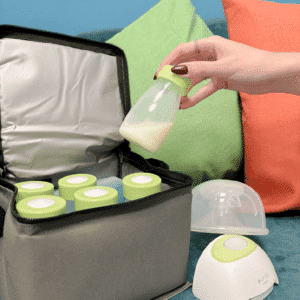
How do I safely store my breastmilk?
- If your baby is or has been unwell or born prematurely, check with your healthcare professional to ensure the same safe storage advice applies to your baby
- Ensure you use clean, sterile containers or milk bags to store your breast milk
- Freshly expressed breastmilk can be stored at room temperature for up to 6 hours. Reduce this time in very warm weather (new evidence is being released that this can be extended up to 8 hours but isn’t finalised as yet)
- Breastmilk can be stored for up to 3 days in a fridge that runs between 5-10 degrees
- Store for up to 5 days if the fridge is 4 degrees or less
- Store the milk in the main freezer for up to 6 months or the ice compartment for 2 weeks
- Ensure when you are transporting milk or going out for the day you use freshly expressed milk and use it within 6 hours, or you use an insulated cool bag with ice packs to keep it cool
- When DEFROSTING milk, it usually takes 12 hours to defrost in the fridge. Use it as soon as it is fully defrosted. Alternatively, defrost it at room temperature or in a jug of warm water and use it as soon as it is defrosted. NEVER use a microwave to warm up or defrost breastmilk.
Remember, every breastfeeding journey is different.
While these answers cover some of the questions I’m asked most often, they’re no substitute for personalised support. If you’re worried about yourself or your baby, don’t hesitate to speak to your midwife, health visitor, infant feeding team or an IBCLC.
And if you’d like more practical breastfeeding tips and evidence-based advice, you can follow The Milk Midwife on social media.

